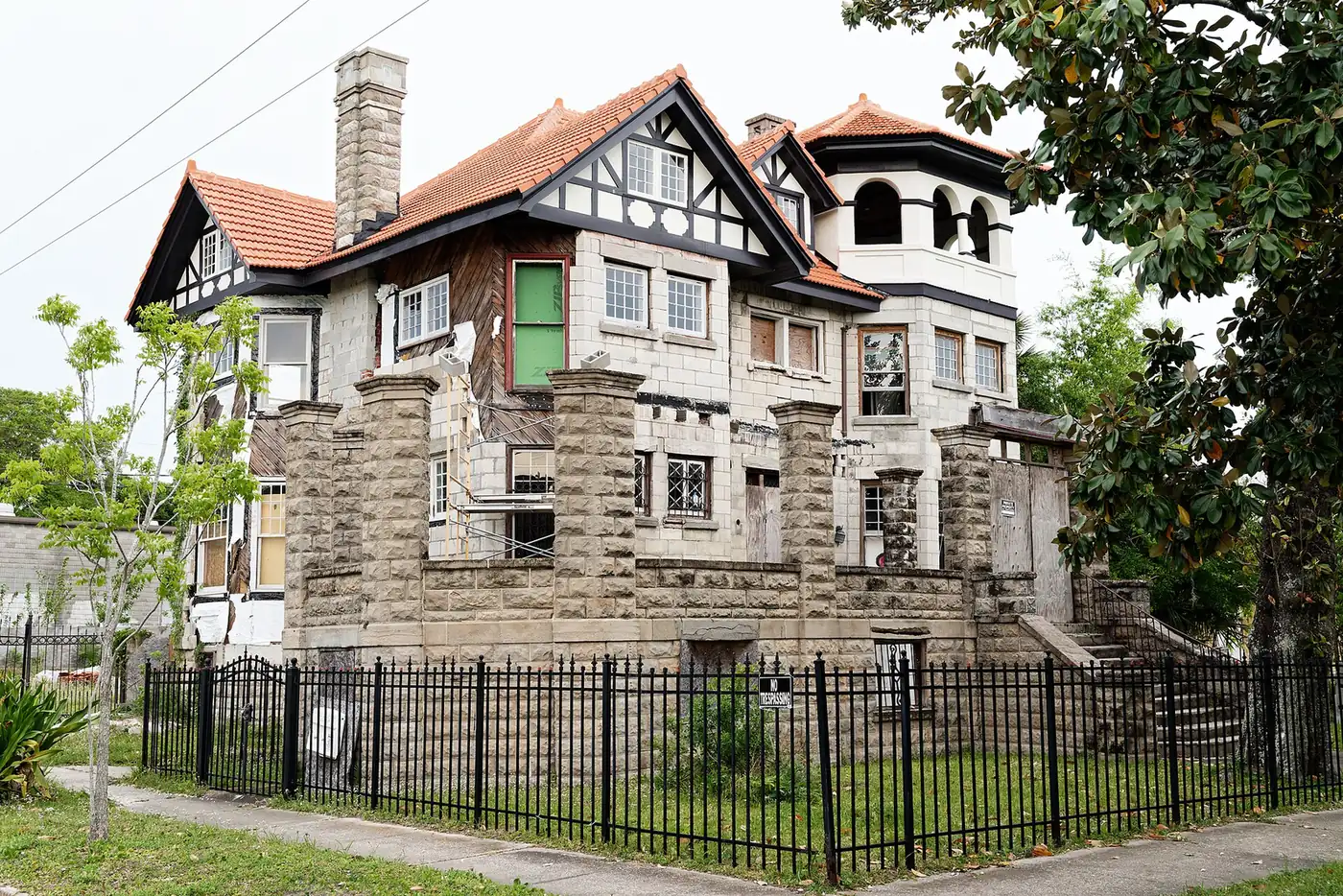
City Council voted 17-0 to create a yearly list of neglected historic homes and keep city-owned ones off the affordable housing list. Nonprofits get first claim, then a $10,000 auction.
Jacksonville City Council voted 17-0 Tuesday for new rules meant to save neglected historic houses, including a yearly list of the homes most at risk.
Ordinance 2026-806 also changes what happens when the city ends up owning a historic house. It now goes to Mayor Donna Deegan and takes effect when she signs it, or when it becomes law without her signature.
The sponsors were council members Jimmy Peluso, Matt Carlucci, Joe Carlucci and Mone’ Holder. The bill says historic buildings need much more time and money to maintain than newer ones and are vulnerable to developer pressure.
A yearly list of homes at risk
The Jacksonville Historic Preservation Commission must send an Endangered Historic Homes List to the mayor’s office at least once each calendar year, according to the Council Research Division’s summary.
A home can be listed only if it meets all of these tests:
- it has one to four homes on the property
- it is a contributing building in a locally designated historic district, or a local landmark
- it has been cited for property maintenance violations or declared an unsafe building
- it carries at least one city lien, such as a demolition, nuisance or fine lien
A committee amendment added older homes in four neighborhoods mapped in the bill: Durkeeville, Durkee Gardens, San Marco and St. Nicholas, according to the Neighborhoods Committee amendment. The floor amendment adopted Tuesday limits those additions to buildings more than 70 years old, council staff said at the meeting, according to the city’s video.
Historic houses the city owns
The law creates a new class of city property, the “Preservation Priority Property.” It covers city-owned land with one to four homes where at least one building is a local landmark or a contributing building in a local historic district. Property in a community redevelopment area or assigned to the Downtown Investment Authority is left out.
Those houses:
- are kept off the city’s affordable housing list
- are offered first, as a donation, to an existing nonprofit whose mission is historic preservation
- go to public auction with a $10,000 opening bid if no nonprofit takes them, with the money going to the city’s fund for restoring endangered historic buildings
Bidders must qualify in advance with the city’s Housing and Community Development Division. They must show:
- they finished an educational course
- they have enough money for the work
- they have experience preserving or restoring historic buildings
- they owe no delinquent taxes or liens
The deed requires the restoration to be finished within two years, shown by a certificate of occupancy. If it is not, the property can revert to the city. Anyone who bought or was given one of these houses after Jan. 1, 2027, and broke those terms so that the city moved to take it back, cannot bid on or receive another.
The bill states that parcels with locally designated historic homes are generally inappropriate for affordable housing, even where they could otherwise be developed.
Other changes
- Before selling any surplus property that is a landmark or in a historic district, the city must weigh the buyer’s preservation experience and require a two-hour course from the Planning Department.
- Fines, liens or special assessments under the historic preservation code that stay unpaid 30 days are sent to the Office of General Counsel. It must analyze the city’s enforcement options and report to the finance director.
The Council Research Division found no fiscal impact.
How it passed
The bill cleared three committees without a no vote: Rules 7-0, Neighborhoods 7-0 and Finance 6-0, according to the meeting minutes. The full council adopted it 17-0 after a floor amendment, which rolled the committee changes into one.
After the vote, Peluso thanked the city’s demolition-by-neglect task force and Planning Department staff for the work behind the bill.
What it means for you
If you live near a boarded-up historic house in Springfield, Riverside-Avondale, San Marco or another historic district, the city will now track the worst cases on a list sent to the mayor each year. The commission chooses which homes go on it.
If you want to restore an old house, city-owned historic homes will come up at auction from $10,000. You will need to qualify in advance and finish the work in two years. Preservation nonprofits get the first chance at each one.
Frequently asked questions
What is Jacksonville’s Endangered Historic Homes List?
A list the Jacksonville Historic Preservation Commission must send to the mayor’s office at least once a year. It names historic homes with one to four units that have code citations or an unsafe-building finding and at least one city lien.
What happens to historic houses the city owns?
Under Ordinance 2026-806, city-owned historic houses outside redevelopment areas are kept off the affordable housing list. They are offered first to a historic preservation nonprofit, then auctioned with a $10,000 opening bid to prequalified bidders who must finish the restoration within two years.
Have your say